Friday, July 1, 2022

April Serendipity Ramble


Occasionally my friend, Bruce Shah, and I just hop in the car and see what we can find out in the rural reaches of New Mexico.


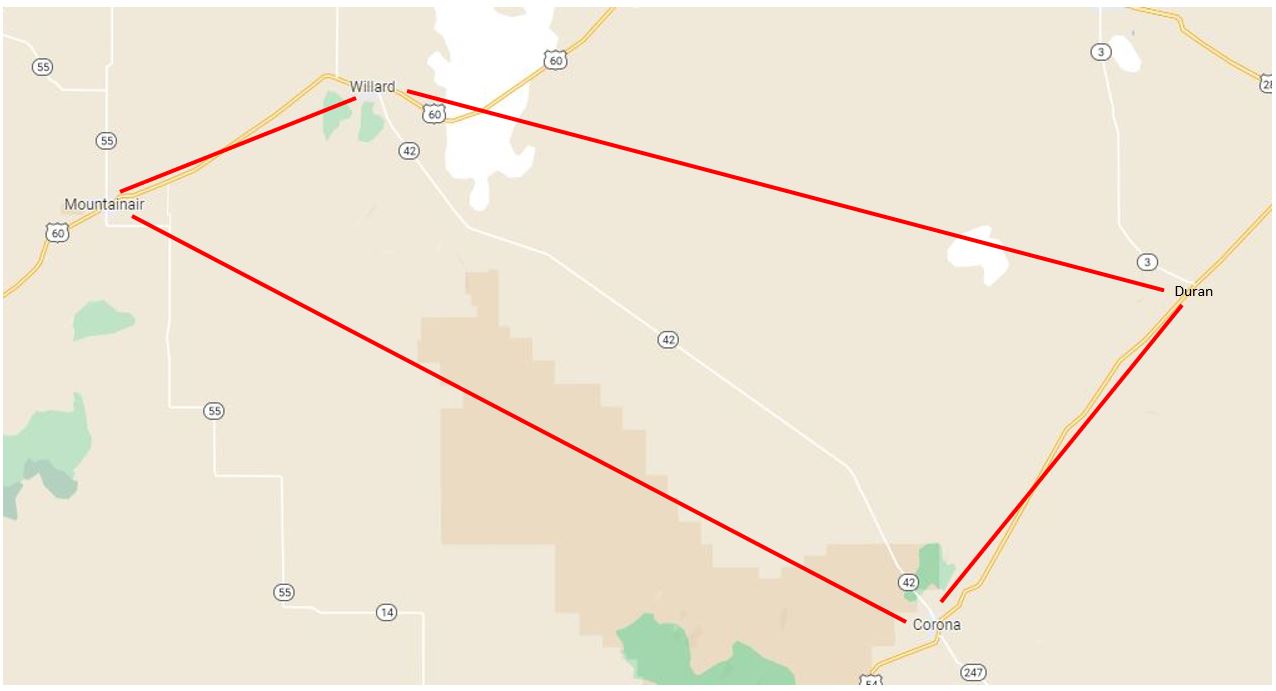
Back in April we lit out for an area in east-central New Mexico bounded by Mountainair, Willard, Duran, and Corona, primarily along NM highway 42 (southeast of Albuquerque; see map below).


Our first stop was Mountainair Cemetery, about a mile west of town, which neither of us had visited previously and wasn't easy to find (not on a main road).  Similar to many rural New Mexico cemeteries, it held a few interesting gravesites and memorials:


Then we headed east to Willard (where we had photographed its cemetery on an earlier trip -- click here to see images from that one), and turned southeast onto NM 42.


About where that little "42" symbol is in the middle of the map above we found what's left of a town called Cedarvale, a farming community founded in 1908.  The town basically emptied out during the Depression, but before it disappeared, the WPA built a school that's still there (now abandoned).


At the Cedarvale school we left Highway 42 and drove northeast  along unpaved county roads to find the now-overgrown Cedarvale Cemetery . . .


. . . and the still-tended Pinos Wells Cemetery (which my friend, Alan Postelnek, and I visited a few years ago) out in the grassy, relatively treeless ranchlands.


As you might be able to tell from the flag, the wind was blowing about 30-40 mph.  That made it a good day for the wind turbine farms in the area . . .


. . . but it also meant dust was blowing everywhere:


We cruised into the small village of Duran (pop. approx. 35) where there are still a few old buildings, including San Juan Bautista church and a general store/hotel building owned by Anton Coury who was murdered in the building by robbers in 1921.


Photo courtesy of J.M. House's blog, "City of Dust"


You can read more about the history of Duran by clicking here.

From Duran we drove down Highway 54 to the town of Corona, where we stopped for lunch at the El Corral Cafe, a classic small-town New Mexico restaurant . . .


. . . complete with a poster for one of New Mexico's favorite flavors:


By the way, Corona was the town closest to the site of the crash of an unidentified device (weather balloon? flying saucer?) 75 years ago on July 3, 1947.  Roswell, NM, gets credit for the UFO because the U.S. Army Air Corps scooped up the debris and took it to Roswell Army Air Field 80 miles away from the crash site.

Having reached the limit of our excursion, we turned around and headed back up Highway 42 to Willard, where we took a little detour northeast on Highway 60 to chase the dust clouds and found this bleak scene:


Then we drove back to Mountainair and made a pit stop at Abo, one of three Salinas Pueblo Missions National Monument sites.  Abo was built in the mid-1600s.  You can read more about it here.


We returned to Albuquerque in late afternoon -- a good day's journey.

If you would like to see these images in a larger format, please visit my photography website, Todos Juntos Photography, by clicking here.

Enjoy!


Saturday, June 18, 2022

Portraits of an Opera - Pelleas et Melisande


Back in March I photographed a dress rehearsal of Opera Southwest's production of Pelleas et Melisande, the only opera completed by Claude Debussy.  The libretto, which Debussy also wrote, is adapted from Maurice Maeterlinck's symbolist play of the same title.


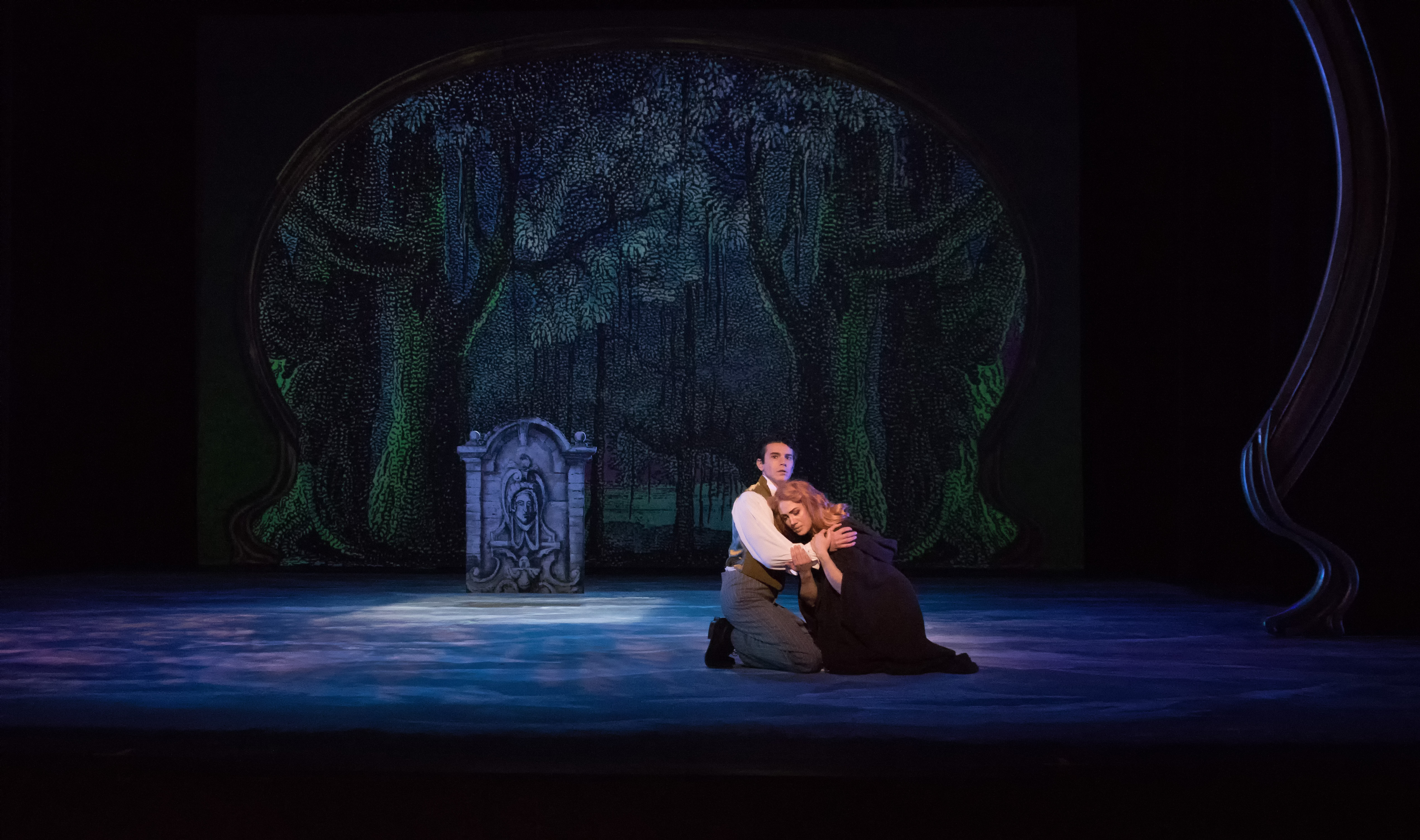
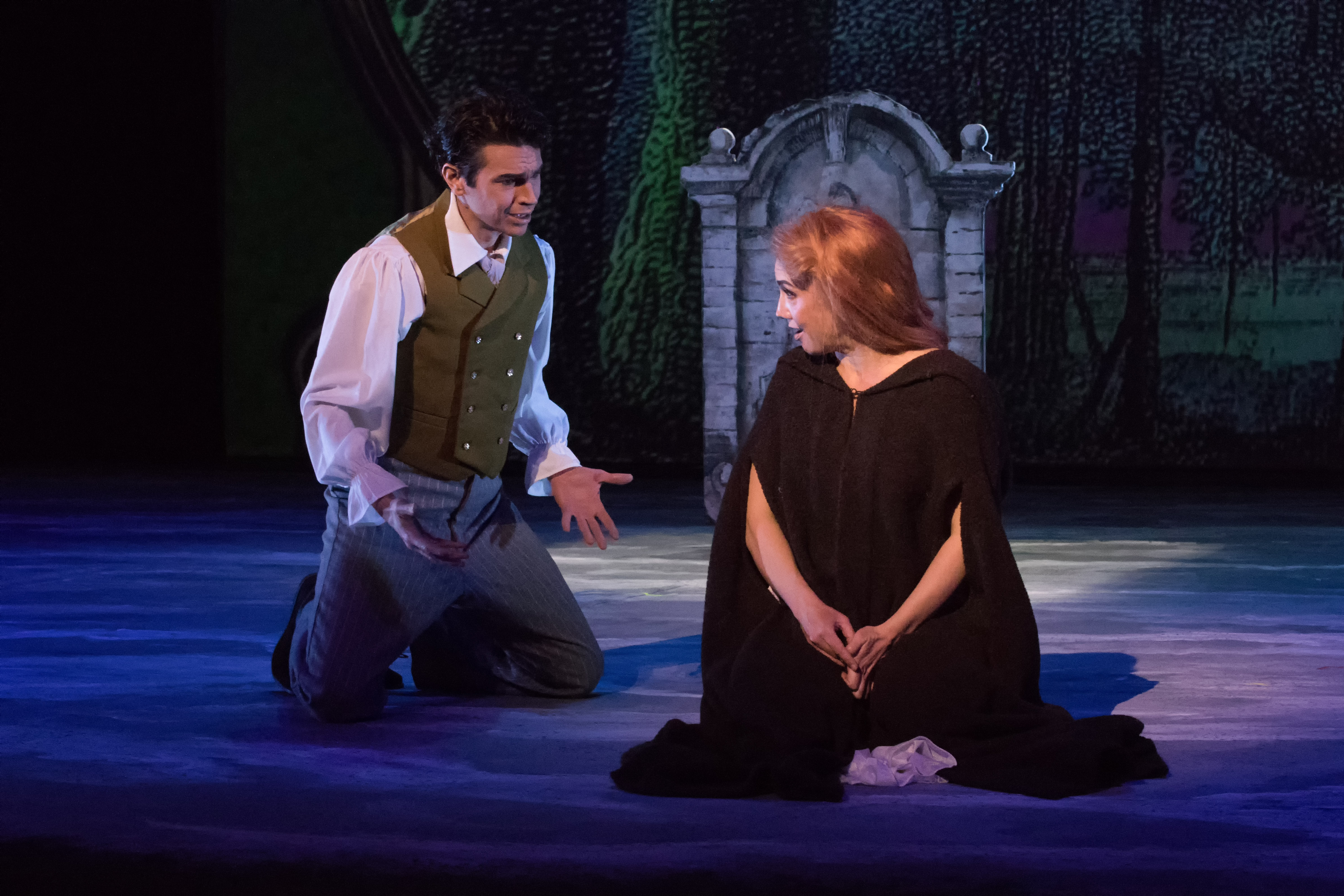
As so many operas are, Pelleas et Melisande is about a love triangle:  Melisande (Andrea Hill) . . .


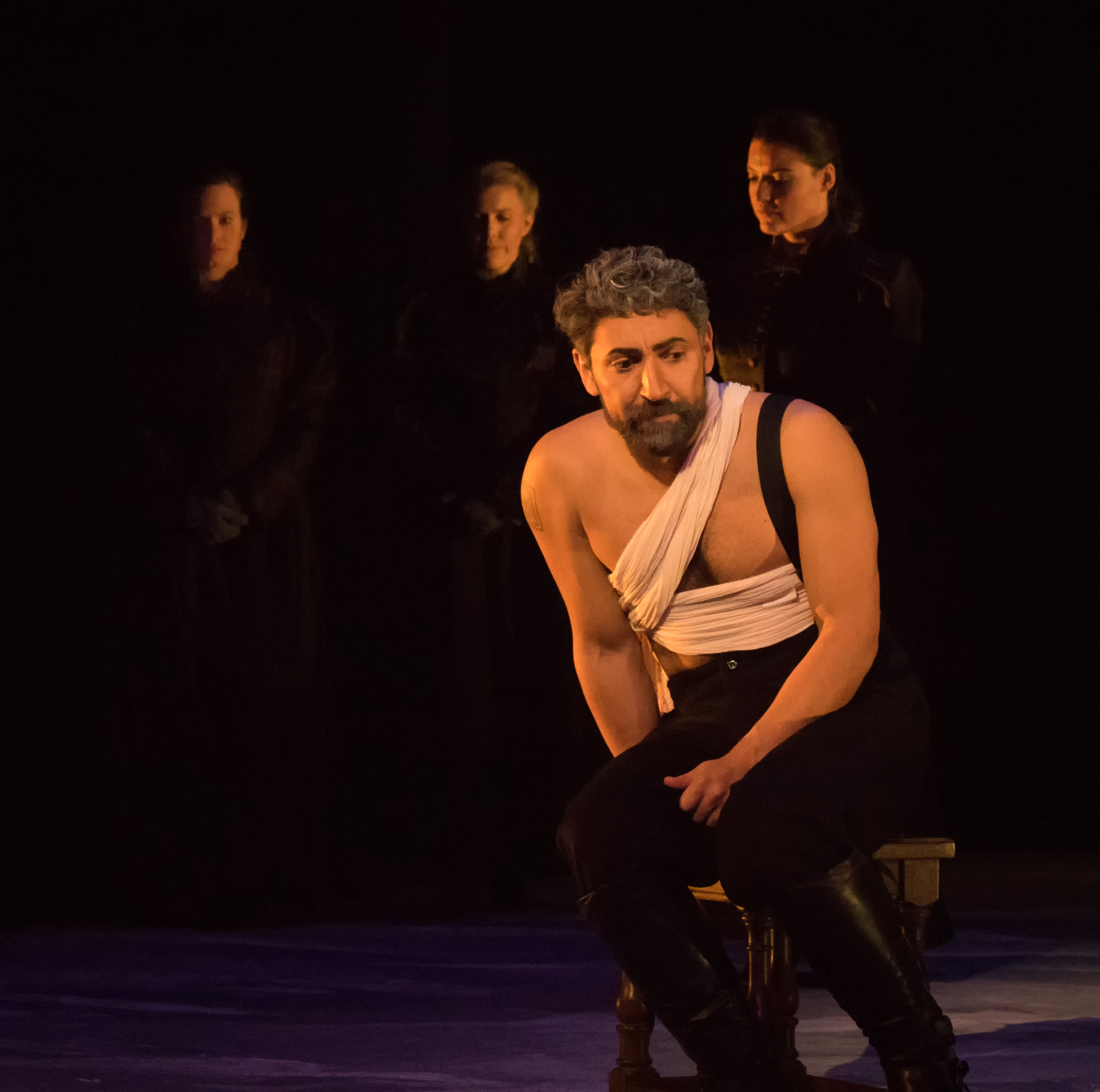
is married to Golaud (Efrain Solis). . .


but she becomes increasingly attached to Golaud's half-brother, Pelleas (John Viscardi).  


 Needless to say, it doesn't end well.


The plot, I have to say, is so convoluted and in places, to my mind, obtuse that I won't try to recapitulate it here, but there's a good summary and other information about the opera in Wikipedia here if you're interested. 


Rather than give you an illustrated version of the story, I'm simply going to share some of the images -- mostly portraits of the singers -- from the production.  (The images above are from the publicity photo session, which I shot a week before the dress rehearsal.)


First I want to show you the stunning use of projected visuals for sets in the Opera Southwest production.


When photographing a dress rehearsal, I try to get a variety of shots from wide to close-up.  As you've seen with the images of projected scenery above, wide shots are good to give the viewer a sense of the scale and the overall spatial relationships of the singers on the stage.


But I prefer close-ups because I want the viewer to see more than what they would see if they were sitting in the audience anywhere further away than the first four or five rows.  I want the viewers to see the expressions and the gestures of the singers -- who, let's face it, are more than singers:  they are actors -- that convey meaning and emotion just as much as their singing does.


And because my images have no aural component, I watch for (and try to capture) moments with individuals -- and, more often, pairs of individuals -- that can make an image that will communicate even without a soundtrack.


For example . . .


Individuals -- lit by professionals -- also provide dramatic or intriguing portraits:


The individual singer who, from my visual perspective, stole the show was Alicia Hurtado, who sang the role of Yniold, Golaud's son by a previous marriage:


Bravo and brava to all the cast, conductor Anthony Barrese, and director David Bartholomew . . . with special thanks to the Lighting Director who provided the beautiful light to make these images.


Images from the complete opera are posted on my photography website, Todos Juntos Photography.  You can find them by clicking here.


Enjoy!