I'm on the board of Music in Corrales, an all-volunteer non-profit organization that brings high quality music performances to our community eight times a year, and also provides supplemental music education for students and teachers in local schools.
Last November we presented the Lysander Piano Trio, a classical ensemble -- piano, violin, cello -- of young, talented, Juilliard-trained musicians. (You can visit their website by clicking here.) In addition to a general audience concert, the Trio agreed to conduct a master class for string ensembles from local high schools, and I had the opportunity to photograph the event.
To begin, the Trio performed a few short pieces, then took questions from the students.
 Then, it was the students' turn. First up was a double string quartet with players from Albuquerque High School and Sandia High School:
The Trio members watched and listened intently . . .
Then, it was the students' turn. First up was a double string quartet with players from Albuquerque High School and Sandia High School:
The Trio members watched and listened intently . . .
then provided critique and suggestions:
Next up was a traditional string quartet from the Albuquerque Youth Symphony Program:
They, too, listened intently to the feedback from Trio members:
Last up was a solo violinist from Rio Rancho High School whose quartet colleagues bailed at the last minute. But the Lysander pianist and cellist generously agreed to accompany her so she could play her piece and receive feedback.
The best part for me as a photographer was capturing the intensity of the student musicians. And black-and-white seemed to convey that intensity best:
 If you would like to see these images in a larger format, please visit my photography website, Todos Juntos Photography, by clicking here.
Enjoy!
Besides being near the Great Sand Dunes National Monument, Alamosa, Colorado, hosts something of a railcar graveyard -- dozens of retired railroad cars and engines from all over the country.
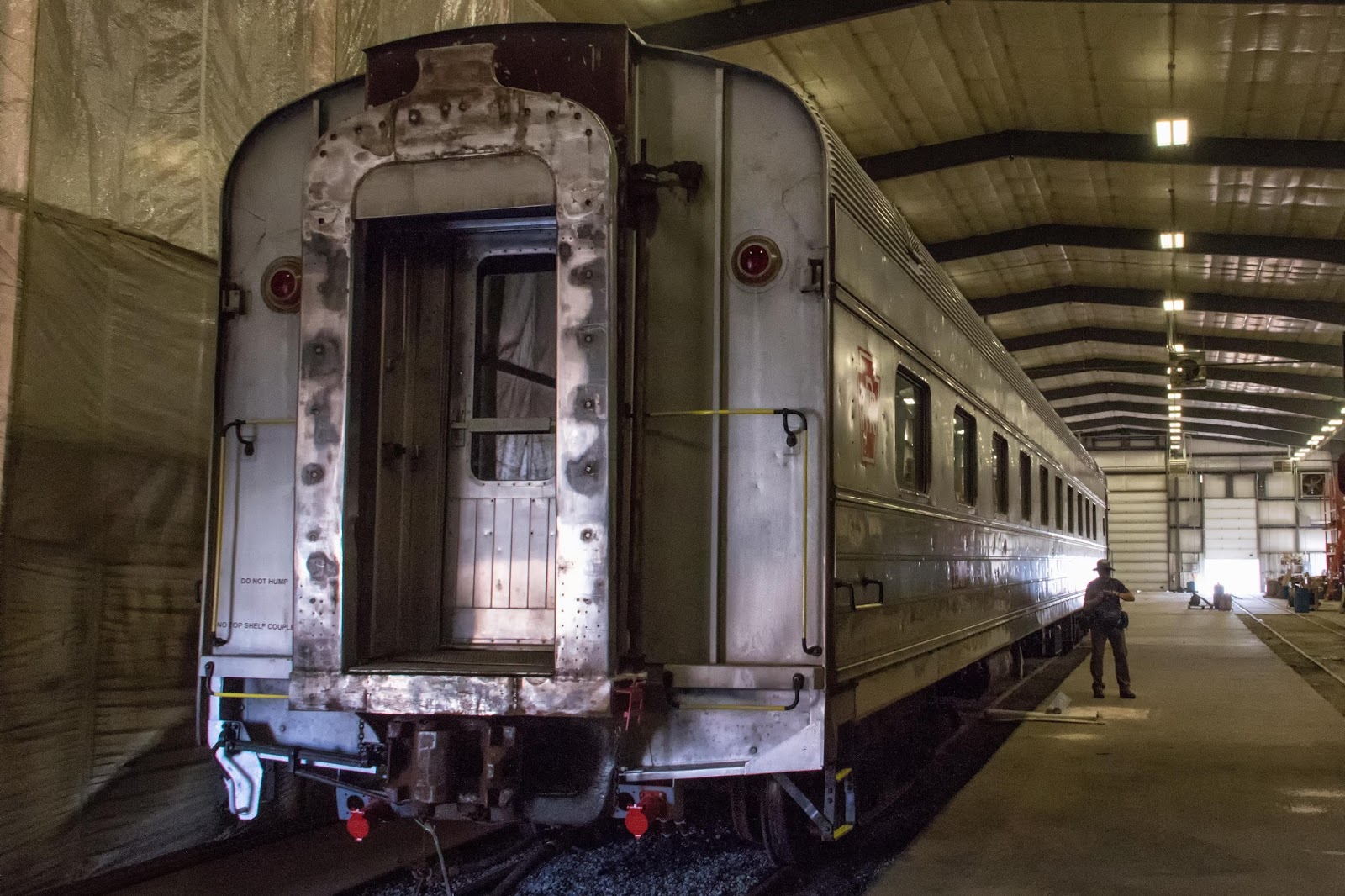
After catching the early light at the dunes, my photo buddies (Barry and Alan) and I spent a morning last August exploring and photographing these rusting relics.
The paint is peeling . . .
And the windows are cracked and broken . . .
But these cars and engines still retain some of their romance and grandeur . . .
We were also able to poke around in a repair barn, where some of the cars and engines are being refurbished and maintained for the Rio Grande Scenic Railroad which operates from Alamosa (about which find more by clicking here or here).
And I couldn't resist photographing this notice painted on one of the passenger cars:
For those of you who don't know railroading, you can learn what it means by clicking here. (Tsk, tsk. You and your dirty mind.)
One last image . . .
If you would like to see these images (and more) in a larger format, please visit my photography website, Todos Juntos Photography, by clicking here.
Enjoy!
About 25 miles northeast of Alamosa, nestled up against a southern branch of the Rocky Mountains in south-central Colorado, is the Great Sand Dunes National Park and Preserve.
 The park was designated as a national monument by Herbert Hoover in 1932, and was made a national park by Congress in 2004. It contains the tallest sand dunes in North America (over 750 feet high), and encompasses over 85,000 acres of park and protected areas.
In August, 2016, I traveled with my photo buddies Barry and Alan to photograph the park.
We arrived at the park in late afternoon, right after a light rainstorm, and the dunes looked like a small mountain range in front of the larger (real) mountains beyond.
The park was designated as a national monument by Herbert Hoover in 1932, and was made a national park by Congress in 2004. It contains the tallest sand dunes in North America (over 750 feet high), and encompasses over 85,000 acres of park and protected areas.
In August, 2016, I traveled with my photo buddies Barry and Alan to photograph the park.
We arrived at the park in late afternoon, right after a light rainstorm, and the dunes looked like a small mountain range in front of the larger (real) mountains beyond.
Compared to the 12,000-ft. high mountains in the background, the dunes may not seem so high. But for comparison, here's an image with a section of Boston's Back Bay skyline superimposed for scale at roughly the same distance:
Thanks to the rain, the shallow creek that flows out of the mountains and bounds the eastern and southern side of the dunes had a bit of water in it.
We crossed the creek and headed across the flats to the dunes. Now you can really begin to see the relative size more clearly. Those two tiny dots in the distance on the far right of the image are people.
Because of the rain, footprints in the sand made very distinct trails. Those dots in the center and upper right of the image are people.
Then it was time to climb.
The dunes are a lot steeper up close than they looked from far away:
Even with slightly wet sand the dunes are steep enough for kids to zoom down in their saucers.
Wheeee!
As we climbed, we could see other visitors on different dunes:
A family from somewhere in Europe, apparently quite accustomed to hiking, charged up the dune . . .
. . . and father and son had a great time:
The woman and man in this image were not related (I learned later), but I thought it made a great picture:
The sun set, and we got a little color out of the overcast day as we made our way back to the car.
The next morning we returned to catch some early light and different shadows on the dunes. The previous afternoon's rain had freshened the vegetation in the foothills surrounding the park:
In the morning light we found some dramatic scenes as we approached . . .
With the direct sunlight, some of the dunes took on an abstract look:
. . . or like the surface of Mars:
Barry and Alan at work . . .
and kids at play in the creek:
One last look before we headed back to Alamosa:
NEXT POST: Alamosa Railcar Graveyard
If you would like to see these images in a larger format, please visit my photography website, Todos Juntos Photography, by clicking here.
Enjoy!