Monday, February 8, 2021

Covid Respite #12, Part 2 - Learning to Fly


I got a new camera for Christmas.  But not the latest DSLR or mirrorless camera.  This one was attached to a drone.


It was a gift from our younger son and his wife.  He has been flying drones since he built his first one from scratch and outfitted it with a GoPro camera over a decade ago.  They were called "quadcopters" back then.


I have always enjoyed the views he got from above, and the visual excitement of flying, but I was never brave enough to consider learning to fly one myself:  too many flight variables to control -- up, down, forward, backward, rotate -- and too many opportunities for crashing.  And then there's the adage about teaching old dogs new tricks.


But when this drone fell into my lap, I had no choice but to step out of my comfort zone and give it a try.


Fortunately, because technology has progressed in the past ten years, this drone includes safety features that earlier models (like the homemade ones) did not have that make it possible for idiots like me to fly relatively safely.


For example, when you stop toggling the control joysticks, the drone will simply hover.  And if you lose track of the drone, the control screen has a map with an arrow and a direct line back to home base for you to follow; it also has a "return to home" button that will automatically fly the drone back to its starting point.  Whew!  Thank goodness for GPS!


Also fortunately, there's an enormous open space just yards away from my house, with no power lines, fences, or vegetation taller than about four feet.  So I can practice flying with plenty of margin for error.
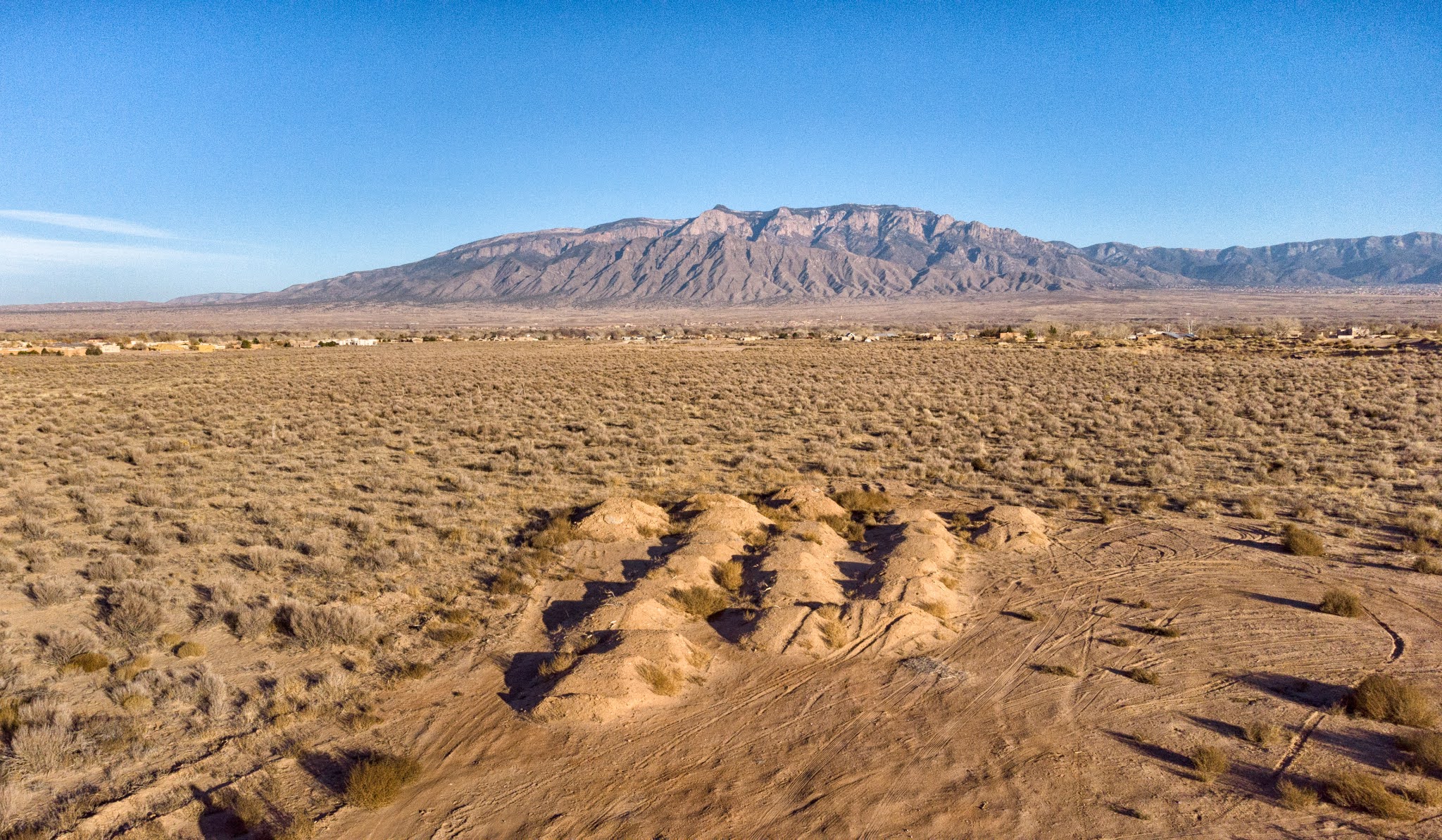


Here's an 86-second practice flight:


In early January, with a grand total of four 15-minute practice sessions under my belt, I decided to bring the drone on my trip to the Lybrook Badlands with my friend, Alan (see previous post).


The flying was a bit ragged -- not always smooth -- and it was scary as heck to fly the drone out of my sight around the giant hills.  But I never crashed it, and I learned a few things about what makes for good flying footage.


So now that you've made it this far in this post, here's your reward:  a 5-minute compilation of flights over a small portion of the Lybrook Badlands.  Notwithstanding the ragged flying, it will give you a sense of the enormous size of the area and its features in a way that still photos from ground level just can't convey.

Enjoy!


Thursday, February 4, 2021

Covid Respite #12, Part 1 - Lybrook Badlands


(This is Part 1 of a two-part story.  Part 2 will be posted in a few days.)


After the holidays, it was time for another Covid Respite getaway with my photographer friend, Alan . . . this time to the Lybrook Badlands in northwest New Mexico.


The Lybrook Badlands are a 10-mile wide expanse of huge dried mud hills, washes, hoodoos (in a few areas), and rocky debris, surrounded by 100-foot high mesas and plateaus, with little vegetation and no marked trails.  Alan and I have been to this area a couple of times, so for this trip we chose to approach it from one of the mesas overlooking the vast valley of hills and rocks.


As we have done for all these trips during the pandemic, we took separate vehicles.  We drove up on the mesa via a service road for oil and gas pipeline installations (note the yellow stakes indicating pipeline in the image below).


Then we hiked to the edge of the mesa to find a downward path into the area.  The view was magnificent.


We found a relatively easy slope that took us down a ridge surrounded by the reddish-brown-gray hills and ravines that are the predominant features of the area.


We walked down as far as we could toward the floor of the valley, stopping only when the drop-off was too steep.


Although the view was magnificent, the light was not my favorite.  As you might be able to tell from the images above, the view into the valley was southward, looking toward the low-elevation mid-day winter sun, so most of the features were back-lit.  For photographing the wide views, this was unfriendly lighting.  


But for photographing smaller-scale elements, it turned the redddish-brown-gray mud hills into a deep charcoal, and accentuated their tones, shapes, and crumbly texture.  So that's where I focused most of my shooting.


There were also patches of snow tucked into ravines and the shaded sides of the hills.


After a few hours, it was time to head back to the cars, and then on to home.


If you would like to see these images in a larger format, please visit my photography website, Todos Juntos Photography, by clicking here.


Enjoy!


Monday, January 18, 2021

Covid Respite #11 - Wintering Waterfowl


                                                                                  My heart in hiding / Stirred for a bird.

                                                                                                        -- Gerard Manley Hopkins, "The Windhover"


Every year, waterfowl from the far north -- sandhill cranes, Canada geese, and snow geese -- come to central and southern New Mexico to spend the winter in the riparian wetlands of the Rio Grande and Pecos rivers.  The cranes come from as far away as Alaska and northeastern Siberia!


So last month it was time to take another Covid Respite trip -- in fact, five visits to three different locations along the Rio Grande:  the Ladd S. Gordon Waterfowl Complex about 50 miles south of Albuquerque (three times); the Bosque del Apache National Wildlife Refuge south of Socorro, NM; and the banks of the Rio Grande on the west side of Albuquerque.


Of the five visits I made in December, two afternoon trips to the Ladd Gordon Waterfowl Complex were the most photographically productive, so the images and accompanying narrative in this post are from those two trips.  


This area had reopened after being closed to the public for the past three years for removal of invasive plants, so we weren't sure whether the birds had returned or found a different area to overnight in.  Fortunately, they were there.


My friend, Alan and I made our first afternoon visit on December 16.  

Typically during the day, cranes and other waterfowl fly to fields miles away from their overnight wetlands to feed.  But in the late afternoon, they return . . . at first a few, then more and more as the sun sets.


Then larger groups began to arrive . . . 


Hundreds of snow geese took off from a nearby field . . .


and circled the pond in huge formations . . .


. . . the light from the setting sun painting the under side of their wings:


After circling the pond a couple of times, the snow geese headed south, perhaps to the Bosque del Apache 40 miles south.


Then, as the sun was dipping below the horizon, more cranes began to arrive . . .


 . . . and a crescent new moon appeared . . .


 . . . along with hundreds more cranes:


Two days later, having been moved by the sight of these magnificent birds, I went back to the Ladd Gordon area with my wife, Linda.


There were plenty of cranes on the ground, along with some mule deer . . .


 . . . some nice clouds to fill the sky . . .


 . . . and on schedule, more cranes coming in with flaps and landing gear down:


We got a beautiful sunset . . .


 . . . and the birds just kept on coming:


Here's a brief video to give you a sense of what it sounded like as the birds flew in:


Witnessing one of nature's most magnificent migrations was a welcome respite from the burdens of the Covid pandemic, and was  salve for the spirit at the beginning of the holidays.

If you would like to see these images (and more) in a larger format, please visit my photography website, Todos Juntos Photography, by clicking here.

Enjoy!


Thursday, December 17, 2020

Covid Respite #10 - Evolution of a Magnificent Sunrise


                                                                  I will lift up mine eyes unto the hills, from whence cometh my help.

                                                                                                                                   -- Psalm 121


All my earlier "Covid Respite" activities involved hopping in the car and traveling around New Mexico.  This one, however, required only that I step out my back door and look east toward the Sandia Mountains at sunrise.


To get a beautiful sunrise, clouds and sun have to move into the right place at the right time.  And of course the photographer has to be there to capture it.  This is the story of one of those times/places.


The morning began with an overcast sky.  But about 6:20am, ominous streaks of red across the dark clouds began to appear,  suggesting that somewhere behind the mountain there might be a gap between the horizon and the cloud deck where sunlight could shine through.  I was counting on that.


6:21 am


The clouds were moving right to left -- more or less southwest to northeast -- and in a few minutes gaps began to appear in the overcast (on the right side of the two images below).


6:25 am


6:28 am


All the while, growing light from the east began to illuminate the underside of a big bank of clouds moving in.


6:31 am


6:33 am


As the red cloud blob faded away to the northeast, more clouds came streaming in from the southwest.


6:40 am


6:43 am


Though there is some brightness and color on the northeast horizon (left side of the image above), the sun is actually rising in the east-southeast (see arrow in the same image below).


So at this point it's not clear whether there will be a gap between the clouds and the horizon for the sun to shine through.  The next few minutes would tell.


Six minutes later, I had my answer.  The clouds in the direction where the sun was rising (on the right in the image below) began to light up, as did the clouds to the northeast (left of the mountain).


6:49 am


6:50 am


Here's a closer look in the direction of the sunrise:


6:51 am


A minute later the sunlight is reaching further overhead.


6:52 am


6:53 am


As the sun rose behind the mountain, the reds intensified and cast an eerie red glow over the entire landscape.


6:54 am


6:56 am


Besides documenting the big picture, I enjoyed looking for interesting details:


Eventually, of course, like all good things, the sunrise would come to an end.  The light on the clouds quickly began to withdraw back toward the east as the sun slipped up above the cloud deck, and in a matter of minutes, the light went out of the sky, returning the landscape to semi-darkness.


6:58 am


6:59 am


7:00 am


I hope you enjoyed the show as much as I did!  If you would like to see these images in a larger format, please visit my photography website, Todos Juntos Photography, by clicking here.